The story of Christ the Savior Cathedral in Moscow is a remarkable one, and well known by many Orthodox Christians in our time. Like so many of the stories of the New Martryrdom, however, few Americans know about it.  One of the largest Orthodox churches in the world, it was originally built in the nineteenth century. But it was blown up on orders of Joseph Stalin in 1931, and became the site of a remarkable–and almost comic–effort by the Communists to establish a new, post-Christian culture. Rebuilt after the collapse of Communism, it is in some ways a monument to the resilience of Christianity in the modern world and of the durability of Christendom. Continue reading
Politics
“Who Will Destroy Whom?”
Political revolutions cost lives, and so can cultural ones. This is true when the agent of change is the government, and that government is totalitarian. It is even more true when the totalitarian government is wedded to an ideology such as Communism.
In recent posts I have introduced the Soviet cult of Lenin within the context of the Communist Party’s violent assault on Christians. The Communists could not avoid violence in general because it was built into the ideology they inherited from Karl Marx. I will speak elsewhere about Marx’s place in the history of Christendom, but here I want to emphasize the role of violence in Marxism’s vision of history. History could not move forward without it. And history had to move forward. In the nineteenth-century “age of progress,” absolute standards of good and evil, cultivated by centuries of Christianity’s influence, were exchanged for a relativistic morality of progress. That which brought it about was good, and that which hindered it was evil. Continue reading
The Fool Says . . .
One of the really remarkable things about the Soviet cult of Vladimir Lenin was its religious character. It is a reminder that strict atheism is rare, even in the modern world.
There is a Psalm verse that speaks of how unusual and even ridiculous atheism is: “The fool says in his heart, there is no god” (Psalm 14:1). The Communists were adherents to the philosophy of Karl Marx and therefore strict atheists. They were convinced religion is an “opiate of the masses” imposed by class oppressors upon the workers and that there is in reality no god whatsoever. The Soviet Union was the first government in world history that committed itself to atheism. And yet, it was also the first government in history to invent a new culture, or system of beliefs and values, that was pseudo-religious. This can be seen in several features of the Lenin cult. Continue reading
Vladimir Lenin and George Washington: Two Cults, Different Ideals
When Lenin died of a stroke in 1924 the Communist Party was eager to immortalize him. The cult of Lenin that resulted went further than all earlier efforts in the history of Christendom–Christian or post-Christian–to glorify departed leaders.
The case of the United States is an interesting contrast. On the one hand, there were undoubted similarities. The “apotheosis of George Washington” depicted on the interior of the Capitol dome in a capital city named after the first president drew upon the pagan Roman practice of deifying departed emperors (that is, literally declaring them to be gods).  Washington was also glorified by a political culture in the early American republic that sought to create an almost mystical sense of his ongoing presence, expressed later by innumerable sites scattered throughout the eastern United States claiming that “George Washington slept here.”
The difference between the cult of Washington and that of Lenin, however, was not just that the one was committed to individual rights and the other to totalitarian dictatorship. What really made the difference was that while Washington showed relative indifference to traditional Christianity and seems to have favored its Enlightenment alternative of deism, Lenin was an atheist and intended to create a civilization of atheists. And it was this goal that colored the cultural revolution that gave rise to his posthumous cult. Continue reading
“Lenin Lives!”
It was one thing to kill Russia’s Christians, and another to destroy Russian Christendom.
In a certain sense, of course, the elimination of Christians would achieve this end. In addition to Orthodox lay people such as the New Martyr Daria (whose execution I recounted in my previous post), most of the clergy was killed off or consigned to places such as Solovetsky Monastery, which was converted to a kind of clerical death camp.

Prisoners at Solovetsky Monastery
Of some fifty thousand parish priests in 1917, only about five thousand existed two decades later. The bishops faced even greater odds against survival.
Without a body of the faithful or the clergy to lead them, the Communists reasoned, Christendom would wither and disappear. But they could not wait for that. They had seized power in the name of an entirely new and post-Christian civilization and intended to usher in its supporting culture as quickly as possible. They were men in a hurry.
And so they launched a cultural revolution on several “fronts.” In this post I will introduce one of them: The notorious cult of Vladimir Lenin. Continue reading
The New Martyrdom
Everyone knows about the old martyrdom, when Roman emperors and angry mobs of pagan citizens put Christians to death by the thousands for their faith. It lives on in the memory of all Christians and helped form the identity of the Church for hundreds of years. But the “new martyrdom” is for some reason less well known.
This new martyrdom is going on now, and in fact has been going on for most of the past five hundred years or so. Continue reading
Cultural Revolution
Before the culture wars of contemporary American Christendom, there were the cultural revolutions of Europe’s totalitarian regimes.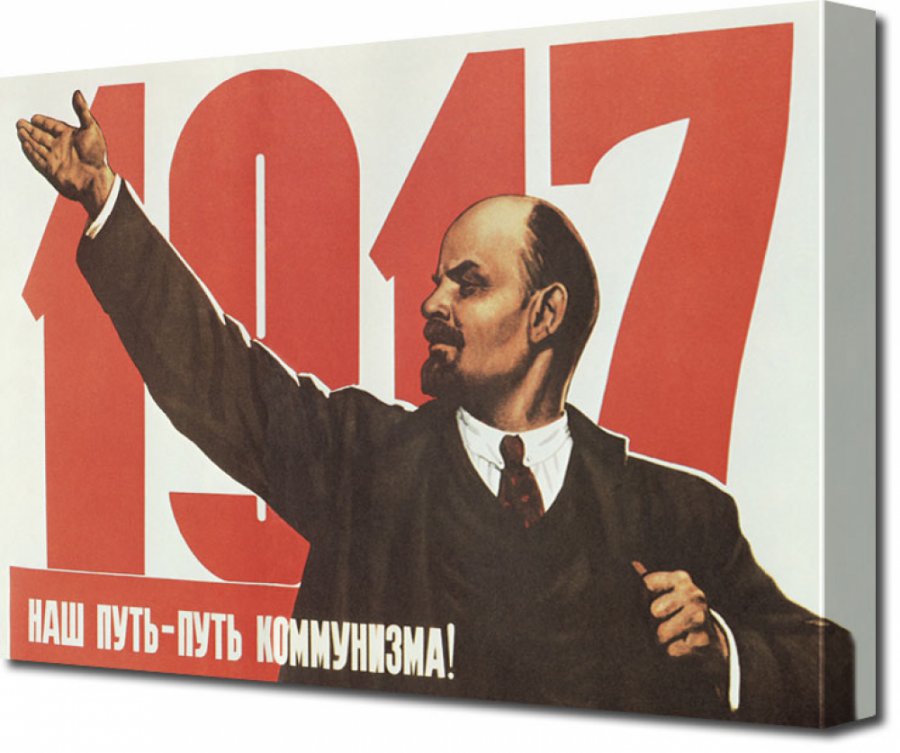
When Trotsky hurled his “dustbin of history” curse upon those who declined to follow Lenin and the Bolsheviks in establishing a socialist utopia in 1917 (see my previous post), he was not only excoriating political rivals. He was suggesting that the Russian Revolution was about more than politics. It was also about culture, that is, it was about the radical transformation of beliefs and values. Continue reading
“Into the Dustbin of History”
It was a dramatic moment in the history of modern Christendom. It was 1917, and the Bolsheviks, under the iron resolve of Vladimir Lenin, had just seized power in a Russia that politically had all but collapsed.

Lenin’s speech to the Congress of Soviets
The last tsar–a devout Christian–had abdicated earlier in the year. An irresolute provisional government under Alexander Kerensky had isolated itself from the discontented population of peasants, workers, and soldiers who were demanding immediate change. And now, as socialists of all types assembled at the Congress of Soviets in the capital, Bolshevik guards were arresting the provisional government and putting Kerensky to flight. (He would ultimately make his way out of Russia and settle in Palo Alto, California, to spend his remaining days teaching about the Russian Revolution at Stanford University). The breathtaking moment was recreated later in Sergey Eisenstein’s rousing but highly deceptive masterpiece of propaganda film, October (which can be viewed here). It was the birth of the world’s first “proletarian dictatorship.”
As Lenin finished explaining–and proclaiming–the imposition of dictatorial rule, a group of moderate socialists decided to walk out in protest. They sought a revolution different than the bloodbath for which the Bolsheviks, soon to be known simply as Communists, were preparing. And as they did so, one of Lenin’s closest collaborators, Leon Trotsky, jumped to the podium and shouted, “That’s right, get out of here! . . . You are worthless! . . . Go were you belong now . . . into the dustbin of history!” Continue reading
From Christ Pantocrator to George Washington Pantocrator
In a post earlier this week, I asked how paradise was manifested in early Christendom. To illustrate, I described the convention within the eastern Church of building temples with a central dome within which an icon of Christ Pantocrator was painted. The effect was that worshipers looking up into the dome experienced “heaven on earth,” or paradise.

The original model of the Christian dome was the cathedral of Hagia Sophia in Constantinople, the largest church in the world when it was rebuilt by Emperor Justinian in the sixth century. (By the way, this became the model for Muslim architecture as well, which began to proliferate after the conquest of large parts of Christian Byzantium during the following century and culminated with the actual conquest of Constantinople in 1453, when Hagia Sophia was first desecrated by the Muslim conquerors and then converted into a mosque–to hear that story, readers can listen to my podcast episode about it here). In the centuries that followed the construction of Hagia Sophia, paradise continued to be experienced in the world through Christian worship and the liturgical art that accompanied it.
However, in the nineteenth century, at the close of the American Civil War, another building with a huge central dome was being completed: the United States Capitol in Washington, D.C.
What a difference a millennium makes! On the one hand, the Capitol building grew out of the tradition within Christendom of erecting monumental structures with central domes within which icons, or “images,” were painted. In this case, however, the design for the image was motivated by modern Christendom’s alternative to paradise, utopia.
The painting can be seen by any tourist to (or resident of) the nation’s capital to this day. Standing within the famous rotunda below, a proud citizen or respectful foreigner gazes up one hundred and eighty feet into this most symbolic of American domes to behold the image of . . . George Washington.

One is tempted to call it “George Washington Pantocrator” because in addition to appearing in majesty as Christ did in early Christian dome icons (the right hand is even outstretched as if in blessing), the first president is surrounded by figures emphasizing the greatness of America and her power to build a perfect civilization on earth.

Farming and industry, science and commerce: the whole range of earthly potential is celebrated. A personified War even appears there, wielding a sword against the nation’s enemies as did the Archangel Michael against the Church’s foes in ancient Christian iconography.

It is a good example of modern Christendom’s secularization of paradise.
What is also of much interest is that the actual title of the painting is The Apotheosis of George Washington. One translation of apotheosis (from the Greek word for deity) is “deification.” It is the word that was used by the pagan Roman state when it claimed its departed emperors were gods and called upon Christians, among others, to worship them.
What does this fascinating painting within one of our nation’s most famous buildings say about the Christian heritage of American civilization?
A Final Lullaby for Hitler

April, 1945 was not a good month for Hitler or the German nation he ruled. The Third Reich teetered on the brink of collapse and a national catastrophe loomed. As American soldiers fought their way across the Rhine River from the west, the Russians moved inexorably toward a doomed Berlin from the east. Soon the city Hitler had once dreamed of redesigning as a monument to Nazism would be reduced to rubble by the Red Army. Mere boys were conscripted to mount a hopeless defense and young women prepared for the worst at the hands of the approaching conquerors. The atmosphere was simply apocalyptic. And it was in exactly this atmosphere that a symbolic but unnoticed moment in the history of modern Christendom was played out.
Albert Speer, the evil genius of German wartime munitions production and a professional architect–indeed, the very man Hitler chose to give Berlin its modernistic face lift–organized one final, climatic performance of the city’s world-famous philharmonic. The event must have been surreal. He tells of it in his remarkable memoirs, Inside the Third Reich. I always find myself fascinated by this work, written as it was by a man who looked over Hitler’s shoulder at some of the most important scenes in the history of Nazi Germany (he can be seen immediately to the Fuehrer’s right in the famous photograph taken before the Eiffel Tower after the fall of France).
The musical performance Speer organized as the capital was encircled served as a kind of artistic last will and testament of National Socialism. As such, it provided a kind of swan song or perhaps even final lullaby for the visionary Fuehrer who had now withdrawn underground into his bunker to prepare for the end, brooding over plans to kill himself.
What was Speer’s musical taste for such an occasion? What else could it be? Richard Wagner’s opera Goetterdaemmerung, or Twilight of the Gods. Wagner was, of course, the preeminent composer for Hitler, and the final opera in the series the Ring of the Nibelung contained an ending that was as nihilistic as Hitler’s vision of the world. I will have much to say about Wagner’s place in the history of Christendom in later posts. It is really quite significant. For the moment, it is striking how well the music suited that vision.
In the final scene of the work, the heroine Brunnhilde, who is herself preparing to commit suicide by riding atop the funeral pyre of her lover Siegfried, pauses for a moment to sing softly to her absent father, the impotent god Wotan. In fact she sounds more like a mother singing a bedtime lullaby to her child. “Ruhe, ruhe, du Gott!” she coos, “rest, rest, O god!” And then the ten-minute march toward the destruction of everything begins, as the Rhine River overflows and the palace of the gods, Valhalla, comes crashing down in flames. It is marvelous music, beautiful and stirring and, when put to use by the Nazis, chilling. If any of my readers has never experienced it, one particular good production (with Gwyneth Jones singing the lead) can be watched here. As the smoke rises on stage at the end of the performance, the scene looks rather like what I expect Berlin did after its fall in 1945.
“Rest, rest, O god!” These words say quite a bit about modern Christendom. No longer convinced that a heavenly paradise can be attained in this world, no longer hopeful that a secular utopia can be built in its place, the values of twentieth-century Christendom found it difficult to resist nihilism. And in the case of the Nazis, to a horrendous degree.
And what was it like to attend that final concert in the doomed Nazi capital? One account related that when it was over, and the chords of one of modern Germany’s greatest musical compositions gave way to the distant thud of approaching tanks, a Nazi official was standing by to distribute cyanide tablets to Berlin’s true believers as they departed.
Was such a scene inevitable for a culture that had lost its moorings in both paradise and utopia?
 PARADISE AND UTOPIA