As some of my readers may be aware, I had the pleasure of sitting for an interview with the late Charlie Kirk shortly before his tragic murder. Now that a forty-day period of mourning has concluded, I have
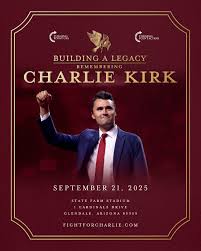
decided to post the video version of the entire interview here on my website. It can be watched using the player below. Excerpts of this video version are also to be found on YouTube, and the entire audio-only version is available on The Charlie Kirk Show website. However, if I am not mistaken this is the only place one can watch the entire interview in video format.
The interview was arranged by The Charlie Kirk Show because Kirk himself had become increasingly aware in recent years of the role of the Orthodox Church in American religious and cultural affairs. The Orthodox Church is numerically very small in America (though it is the second most populous church in the world at large). Nevertheless, it is growing today at a very fast rate. As I note in the interview, it is America’s “best kept religious secret.” The reasons for this remain to be studied, but one of them is that many in the West–especially Generation Z–have concluded that the secular culture and political ideologies that make up the beliefs and values of our time have reached a dead end.
Charlie Kirk never reached a dead end. He was a sincere advocate for heartfelt debate and appears to have welcomed spiritual transformation until his dying day. He was clearly a devoted Protestant Christian. But it is also clear he was seeking knowledge about the Orthodox faith in an effort to grow spiritually and finds ways of fostering a renewal of the West.
Please note: The interview begins at 0:0:30, before which the microphones were turned off.

 It appears in the wake of successful and provocative publications by conservative Christian authors such as Rod Dreher’s best-selling The Benedict Option, R.R. Reno’s Resurrecting the Idea of a Christian Society, Anthony Esolen’s Out of the Ashes, and Charles Chaput’s Strangers in a Strange Land. It addresses the same audiences as these excellent works, but pursues a direction of cultural inquiry that is largely lacking in them: the deep and often neglected history of an “other” West that is, in the end, very different than the one to which we are accustomed. That West is the Christendom that preceded modern times. The Age of Paradise is being released with the conviction that in order to address and perhaps even solve today’s “crisis of culture” it is necessary to rethink where it came from and where in the future it might go.
 Doctrines like sola scriptura (the authority of “scripture alone”) were devised by Luther and other Protestant fathers to correct these deviations. This is all well known to any college undergraduate who has been through a course in western civilization.
 Joshua Feuerstein, an Evangelical Protestant Christian, posted


 PARADISE AND UTOPIA