In yesterday’s post I presented the movement in fourteenth-century eastern Christendom known as hesychasm as a sort of foil (or contrasting device) against the disaffection that was stirring at the time among western thinkers such as Petrarch. The necessary link in this case was Barlaam of Calabria, the theologian who lived temporarily in Byzantium but fell out with the hesychastic current there and ultimately returned to his native Italy. There he converted to Roman Catholicism. Serving as Greek tutor to the illustrious Petrarch, it is conceivable that his agnosticism about the possibility of man experiencing the immediate presence of God in this world (what I call “paradise”) was passed on to his pupil, soon to be known as the father of modern humanism.
And so, we not only have a moment when a new stage in the history of Christendom is discernable–what I called the symbolical birth of utopia–but also an opportunity to reflect on what was being “left behind” in the old stage, represented as it was by the east. By this time, the Roman Catholic west had pretty much committed itself to what, to the Orthodox at least, appeared to be significant innovations. These included papal ecclesiology, scholastic theology, and doctrinal development (resulting in what had come to be called purgatory). As such, the west represented what might be called a “new Christendom,” and I will be spending time in future posts addressing it. But here I would like to say a few words about the “old Christendom” of the Orthodox east, and the important place hesychasm played in it. For it was this movement that not only embodied traditional Christianity’s conviction about the presence of God in this world, but insulated the east from forces that would eventually lead western Christendom into disarray. Continue reading
 On December 26, the ultimate symbol of Christmas festivity, the Christmas tree, is tossed into the garbage and life returns to its normal, non-festal mode.
 The author of the Atlantic article “reveals” to his large audience that the depiction of an ox and an ass in many such scenes is not supported by the “evidence” of the Gospel accounts, but, as Joel Miller notes, totally misses the very scriptural foundation (Is. 1:3) for these animals regarding the Messiah whom so many rejected. The point is, an icon is not a photo snapshot. It is a revelation or proclamation of a reality that includes but goes beyond the immediately visible. “It’s curious,” Joel observes, “that people who at times snicker at wooden literalism become so woodenly literal.”
 Doctrines like sola scriptura (the authority of “scripture alone”) were devised by Luther and other Protestant fathers to correct these deviations. This is all well known to any college undergraduate who has been through a course in western civilization.
 Joshua Feuerstein, an Evangelical Protestant Christian, posted
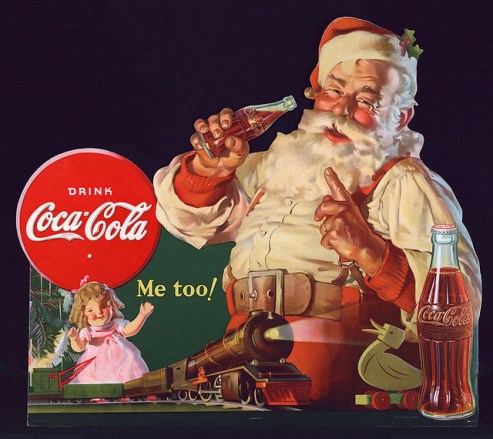
  Restaurants are humming with patrons. Offices are cheerful with festivity. That December 25 is still weeks away does not really matter. The world loves a party, and Christmas provides a month of opportunities. It is delightful, and there is no other season of the year like it.
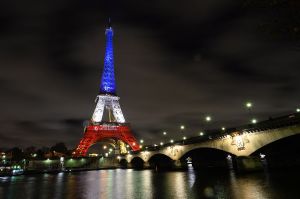 The United States and France, along with the west as a whole, have much in common. We are hated by Muslim extremists.

 PARADISE AND UTOPIA