In a previous post, I ruminated on an imaginary encounter between Charles Darwin–visionary of a secularized anthropology–and a working class widow begging for alms with her orphaned children on a cold and rainy street in central London. I named the woman and the street where she stood after Mrs. Gumdrop (Katerina Marmelodova), a character in Dostoevsky’s Crime and Punishment. That novel depicted the effects of an anthropology–or vision of humanity–in which people are no longer the image of God (imago Dei), the greatest standard by which a creature can be evaluated and the source of transcendent human dignity. Instead, people are beings–even animals–belonging to a genus-species named Homo sapiens. Measured biologically rather than theologically, man came to have a value only as great as his contribution to the natural order in which he lived. In a time of industrial competition and liberal individualism, this may have made those at the top of society great. But it made those at the bottom of society less than great, and even expendable.
Continue readingWestern civilization
Reformation and the Forgotten Orthodoxy of the West
A year has passed since western Christendom began its quincentennial celebration of the Protestant Reformation. Martin Luther’s memorable act of nailing ninety-five theses against the sale of indulgences to the door of a church in Wittenberg on October 31, 1517, can once again be viewed in light of the present. 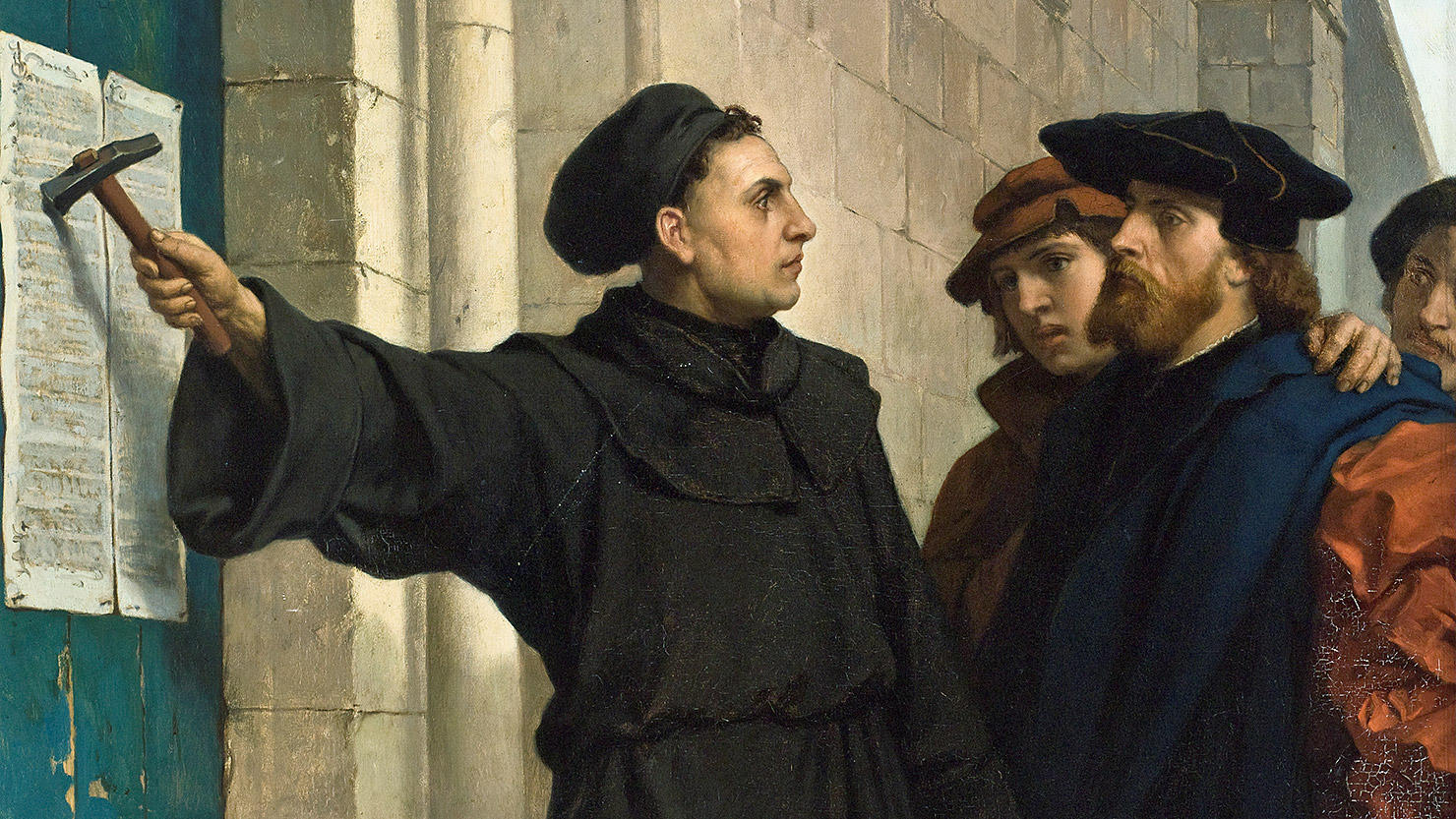 Today, many Christians of the west remember the event as one of liberation from the straitjacket of medieval superstition. Others see it as the sundering of a unitary civilization which, however flawed, provided a Christian basis for most of the human experience. But all would have to agree that something has gone terribly wrong with our culture in the past five hundred years.
 PARADISE AND UTOPIA