The Crusades, Again!

Since my last post in the aftermath of the Parish shootings a new atrocity has been committed by Muslim radicals, and this time in America. The married couple who massacred fourteen people in San Bernardino, California, did so in the name of ISIS, at least according to this morning’s news. gettyimages-499859786_custom-c3e7f667bc8b56d4b2030f0f78810b27dd59f994-s900-c85Regardless of their motivation (which may never be fully known), reports further reveal a “gleeful” response on the global internet in recent days by ISIS supporters, some of whom, once again, identify the victims of this attack (and who were doing nothing more threatening to Islam than attending a holiday party) as “crusaders.”

As I’ve said in earlier posts, there is no point in taking the ravings of fanatics too seriously. But the readiness of terrorist sympathizers to affiliate the San Bernardino victims with the crusades, those Christian wars against Muslims nearly a thousand years ago on the other side of the planet, reminds us of the need to keep our historical memory clear of errors.

So, let me say three things about the crusades that will clarify their significance for the identity of the west and Christendom generally.

  1. First, The crusades were fought during the course of only two centuries, from the First Crusade of 1096 to the fall of the last crusader outpost of Acre in 1291. This chronology alone demonstrates how secondary and even accidental they were to the character of Christian civilization, which had flourished for a millennium before they occurred. During those first thousand years wars were not waged by Christians in the name of their faith. The only possible exception–the one that “proves the rule”–was the defensive war against Persia fought during the seventh century by Byzantine Emperor Heraclius to push back a pagan aggressor and recover from it a sacred object for Christians, the True Cross (on which Jesus was reputed to have been crucified). And, of course, during the first three centuries of Christendom Christians altogether lacked the military and political resources to wage war. The crusades of the twelfth and thirteenth centuries, therefore, are not necessarily characteristic of Christian civilization, and as I will argue more directly in point three below are even an aberration within it.
  2. Second, the crusades were a re-conquest of lands earlier conquered by Muslim Arabs fighting a jihad, or religious war, against Christians. The lands that today make up much of the Arab world were once populated by Christians. This detail is often lost on modern evaluations of the wars. Those lands had “originally” been conquered by the pagan Roman Empire, and when that empire converted peacefully to Christianity beginning in the fourth century the populations there became Christian ones. Known to historians as Byzantium, the Christianized eastern Roman Empire of Constantine and his successors was the main target of the Muslims who, following Muhammad’s example of violent religious expansion, exploded out of Arabia during the seventh century and rapidly overran Christian Palestine (Jerusalem fell in 637), Christian Syria (Damascus fell in 634), and Christian Egypt (Alexandria fell in 642). Arab Muslim assaults on the citadel of Constantinople itself in 674 failed, saving Byzantium and the rest of eastern Christendom from Islamification. In 732, Frankish ruler Charles Martel defeated the invading Arabs at the Battle of Tours (located in modern day France), saving western Christendom from the same fate.
  3. Finally, the crusades were an aberration of traditional Christianity, which, as everyone knows, contains in its New Testament scriptures (again in dramatic contrast with the Muslim Koran) not only no calls to arms, but commandments to love one’s enemies and turn the other cheek. This aberration is revealed historically by the fact that religious wars did not only not occur for the first thousand years of Christendom (unlike Islam, which launched religious wars from its inception), but that they never occurred in the history of eastern Christendom at all. Their occurrence in the west coincided almost directly with the event known as the Great Schism, which separated western Christendom from eastern Christendom. This event, occurring formally in 1054 (that is, only about one generation prior to the opening of the First Crusade), consolidated two distinct cultural units. Western Christendom was thereafter shaped by Roman Catholicism (at least until the Protestant Reformation shattered its unity five hundred years later) and eastern Christendom was shaped, as it always had been, by Orthodox Christianity. The Great Schism was an event of huge significance in understanding the history of Christendom and the formation of modern western civilization, though, strangely, it is usually ignored when making assessments of the place of the crusades in that history. And if people in the west ignore its significance, we should perhaps not be too surprised when the jihadists of our time do so as well!

The fact is, Orthodox Christendom has never supported the concept of holy warfare, or killing in the name of God. There have been plenty of atrocities and abominations committed by Orthodox Christians over the centuries. But the Orthodox Church has never formally launched a crusade. As a matter of fact, her faithful were more than once victims of them. (To learn about the Roman Catholic crusades against Orthodox Christians, readers can listen to my podcast episode here). Nor, it bears emphasizing, has she ever instituted an inquisition to persecute and punish heretics. Nor has she fought religious wars against schismatics such as occurred in the horrible “wars of religion” between Roman Catholics and Protestants for two centuries in western Christendom on the eve of the Enlightenment, and which contributed significantly to the loss of confidence in Christendom and the rise of a modern effort to secularize it.

But that is another story, to be discussed in another post.

Image credit: National Public Radio
Are We Crusaders?

In my previous post I noted that among several causes for radical Islam’s hatred of the west there is the legacy of the crusades, the series of wars fought by Christians against the Muslim Arabs during the middle ages.

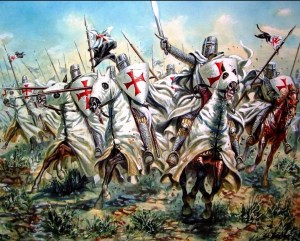
TheFirstCrusadersIt is striking that in the statement issued by ISIS following the recent attacks in Paris the authors claimed to be visiting a kind of revenge on what they called “crusaders.” It is obviously a fantastic stretch of the imagination to equate the average Parisian of the twenty first century with the crusaders of the twelfth and thirteenth centuries. The difference in mentalité could not be greater. Continue reading
Why Do They Hate Us So? (Toward a Definition of “Us”).

Less than a week ago, Muslim terrorists attacked and killed more than a hundred people in Paris, leaving many more wounded and suffering. France, recently distinguishing herself as aloof from America’s “war on terror,” has now (in the words of President Francois Hollande) declared herself “at war” with ISIS. French jets have begun to bomb military targets in Syria to defend France and the west from radical Islam.

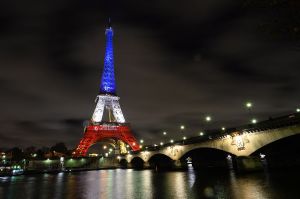
Indeed, not only the west but the world community has expressed deep sympathy for France, reminding one of the global expressions of solidarity with the United States in the aftermath of the September 11 attacks. FRANCE-ATTACKS-EIFFEL TOWERThe United States and France, along with the west as a whole, have much in common. We are hated by Muslim extremists.
Why?

Apart from the psychological fact that fanatics always need someone to hate, the following are three particularly apparent reasons: Continue reading

“Who Will Destroy Whom?”

Political revolutions cost lives, and so can cultural ones. This is true when the agent of change is the government, and that government is totalitarian. It is even more true when the totalitarian government is wedded to an ideology such as Communism.

In recent posts I have introduced the Soviet cult of Lenin within the context of the Communist Party’s violent assault on Christians. The Communists could not avoid violence in general because it was built into the ideology they inherited from Karl Marx. I will speak elsewhere about Marx’s place in the history of Christendom, but here I want to emphasize the role of violence in Marxism’s vision of history. History could not move forward without it. And history had to move forward. In the nineteenth-century “age of progress,” absolute standards of good and evil, cultivated by centuries of Christianity’s influence, were exchanged for a relativistic morality of progress. That which brought it about was good, and that which hindered it was evil. Continue reading

The Fool Says . . .

One of the really remarkable things about the Soviet cult of Vladimir Lenin was its religious character. It is a reminder that strict atheism is rare, even in the modern world.

There is a Psalm verse that speaks of how unusual and even ridiculous atheism is: “The fool says in his heart, there is no god” (Psalm 14:1). The Communists were adherents to the philosophy of Karl Marx and therefore strict atheists. They were convinced religion is an “opiate of the masses” imposed by class oppressors upon the workers and that there is in reality no god whatsoever. The Soviet Union was the first government in world history that committed itself to atheism. And yet, it was also the first government in history to invent a new culture, or system of beliefs and values, that was pseudo-religious. This can be seen in several features of the Lenin cult. Continue reading

“Lenin Lives!”

It was one thing to kill Russia’s Christians, and another to destroy Russian Christendom.

In a certain sense, of course, the elimination of Christians would achieve this end. In addition to Orthodox lay people such as the New Martyr Daria (whose execution I recounted in my previous post), most of the clergy was killed off or consigned to places such as Solovetsky Monastery, which was converted to a kind of clerical death camp.

Prisoner at Solovetsky Monastery

Prisoners at Solovetsky Monastery

Of some fifty thousand parish priests in 1917, only about five thousand existed two decades later. The bishops faced even greater odds against survival.

Without a body of the faithful or the clergy to lead them, the Communists reasoned, Christendom would wither and disappear. But they could not wait for that. They had seized power in the name of an entirely new and post-Christian civilization and intended to usher in its supporting culture as quickly as possible. They were men in a hurry.

And so they launched a cultural revolution on several “fronts.” In this post I will introduce one of them: The notorious cult of Vladimir Lenin. Continue reading

Cultural Revolution

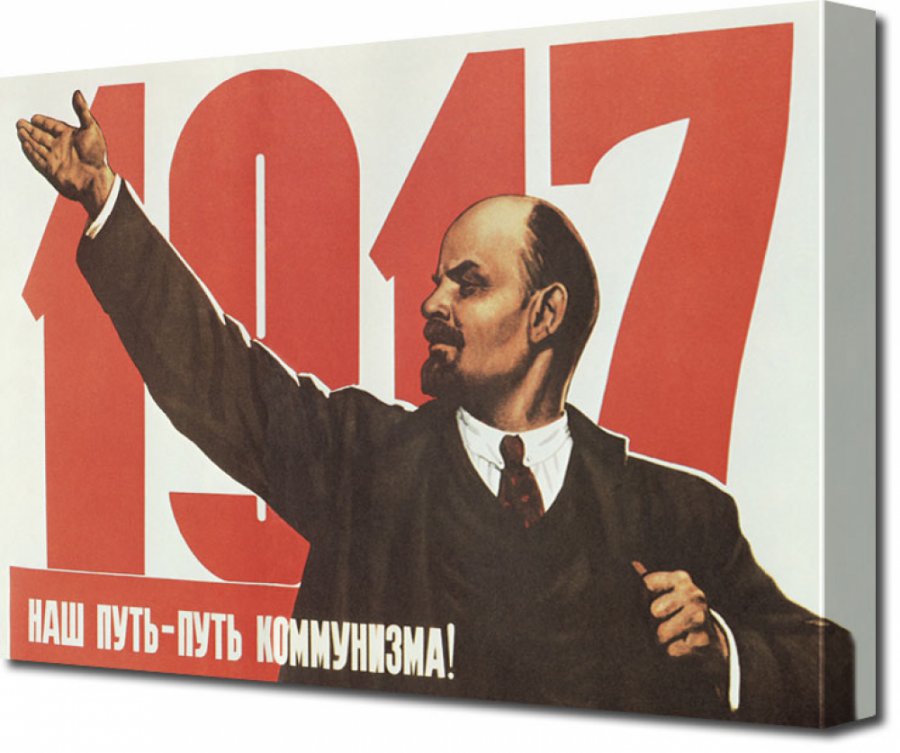
Before the culture wars of contemporary American Christendom, there were the cultural revolutions of Europe’s totalitarian regimes.Lenin1917SovietPoster-3

When Trotsky hurled his “dustbin of history” curse upon those who declined to follow Lenin and the Bolsheviks in establishing a socialist utopia in 1917 (see my previous post), he was not only excoriating political rivals. He was suggesting that the Russian Revolution was about more than politics. It was also about culture, that is, it was about the radical transformation of beliefs and values. Continue reading

“Into the Dustbin of History”

It was a dramatic moment in the history of modern Christendom. It was 1917, and the Bolsheviks, under the iron resolve of Vladimir Lenin, had just seized power in a Russia that politically had all but collapsed.

096u10000610

Lenin’s speech to the Congress of Soviets

The last tsar–a devout Christian–had abdicated earlier in the year. An irresolute provisional government under Alexander Kerensky had isolated itself from the discontented population of peasants, workers, and soldiers who were demanding immediate change. And now, as socialists of all types assembled at the Congress of Soviets in the capital, Bolshevik guards were arresting the provisional government and putting Kerensky to flight. (He would ultimately make his way out of Russia and settle in Palo Alto, California, to spend his remaining days teaching about the Russian Revolution at Stanford University). The breathtaking moment was recreated later in Sergey Eisenstein’s rousing but highly deceptive masterpiece of propaganda film, October (which can be viewed here). It was the birth of the world’s first “proletarian dictatorship.”

As Lenin finished explaining–and proclaiming–the imposition of dictatorial rule, a group of moderate socialists decided to walk out in protest. They sought a revolution different than the bloodbath for which the Bolsheviks, soon to be known simply as Communists, were preparing. And as they did so, one of Lenin’s closest collaborators, Leon Trotsky, jumped to the podium and shouted, “That’s right, get out of here! . . . You are worthless! . . . Go were you belong now . . . into the dustbin of history!” Continue reading

From Christ Pantocrator to George Washington Pantocrator

In a post earlier this week, I asked how paradise was manifested in early Christendom. To illustrate, I described the convention within the eastern Church of building temples with a central dome within which an icon of Christ Pantocrator was painted. The effect was that worshipers looking up into the dome experienced “heaven on earth,” or paradise.

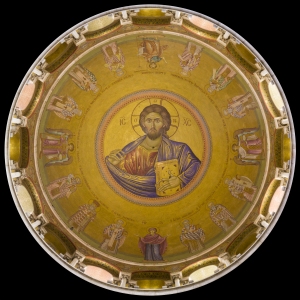
ISR-2013-Jerusalem-Holy_Sepulchre-dome

The original model of the Christian dome was the cathedral of Hagia Sophia in Constantinople, the largest church in the world when it was rebuilt by Emperor Justinian in the sixth century. (By the way, this became the model for Muslim architecture as well, which began to proliferate after the conquest of large parts of Christian Byzantium during the following century and culminated with the actual conquest of Constantinople in 1453, when Hagia Sophia was first desecrated by the Muslim conquerors and then converted into a mosque–to hear that story, readers can listen to my podcast episode about it here). In the centuries that followed the construction of Hagia Sophia, paradise continued to be experienced in the world through Christian worship and the liturgical art that accompanied it.

However, in the nineteenth century, at the close of the American Civil War, another building with a huge central dome was being completed: the United States Capitol in Washington, D.C.

What a difference a millennium makes! On the one hand, the Capitol building grew out of the tradition within Christendom of erecting monumental structures with central domes within which icons, or “images,” were painted. In this case, however, the design for the image was motivated by modern Christendom’s alternative to paradise, utopia.

The painting can be seen by any tourist to (or resident of) the nation’s capital to this day. Standing within the famous rotunda below, a proud citizen or respectful foreigner gazes up one hundred and eighty feet into this most symbolic of American domes to behold  the image of . . . George Washington.

apotheosis

One is tempted to call it “George Washington Pantocrator” because in addition to appearing in majesty as Christ did in early Christian dome icons (the right hand is even outstretched as if in blessing), the first president is surrounded by figures emphasizing the greatness of America and her power to build a perfect civilization on earth.

B10

Farming and industry, science and commerce: the whole range of earthly potential is celebrated. A personified War even appears there, wielding a sword against the nation’s enemies as did the Archangel Michael against the Church’s foes in ancient Christian iconography.

War_in_The_Apotheosis_of_Washington

It is a good example of modern Christendom’s secularization of paradise.

What is also of much interest is that the actual title of the painting is The Apotheosis of George Washington.  One translation of apotheosis (from the Greek word for deity) is “deification.” It is the word that was used by the pagan Roman state when it claimed its departed emperors were gods and called upon Christians, among others, to worship them.

What does this fascinating painting within one of our nation’s most famous buildings say about the  Christian heritage of American civilization?

How Was Paradise Manifested in Early Christendom?

I have defined Christendom as a civilization with a supporting culture that directs its members toward the transformation of the world around them. ISR-2013-Jerusalem-Holy_Sepulchre-dome

A very long time ago, this core value was grounded in the traditional Christian experience of paradise. This experience, the very kingdom of heaven, was joined to life in the world. God was everywhere present within it. Having entered into the world and assimilated it to himself through the incarnation, he gave new life to it and this in turn inspired a totally new approach to it. Christians now saw every aspect of worldly existence in light of the kingdom of heaven, which, while not of this world, was nevertheless in this world through the presence of the Church.

As a result, family life was transformed from a means toward security, status, affection, or sexual gratification into a real encounter with God and a taste of salvation. More problematic was the state, which after Emperor Constantine’s conversion rolled back the blood sports of pagan Rome, but did little to eliminate slavery and continued to descend into savage cruelty in its irrepressible lust for power. I will write about these and other examples of early Christendom in due time.

For now, though, let me direct your attention toward the way ancient Christian worship and the liturgical arts manifested paradise. Perhaps the best example of this is the central dome of a church building, which hovered over the inhabitants of Christendom (especially in the east) as the heavens do over one standing in the middle of a field in the darkness of the night. But instead of looking upward to behold the moon and stars, Christians beheld the face of God incarnate. An icon of Christ Pantocrator (which means “all-mighty” in Greek) was typically painted within the interior of the dome and gazed down majestically on those assembled.

To be sure, this was a breakthrough in the history of architecture and painting. But it was much more than that. It was a proclamation that “the kingdom of heaven has drawn near” to this world.

ISR-2013-Jerusalem-Holy_Sepulchre-dome (2)

An interesting question to ask is, If a great percentage of the population of Christendom regularly stood within a church building and gazed upward into the face of an incarnate God who was visibly manifested in their midst, what effect would it have on their vision of the world around them?